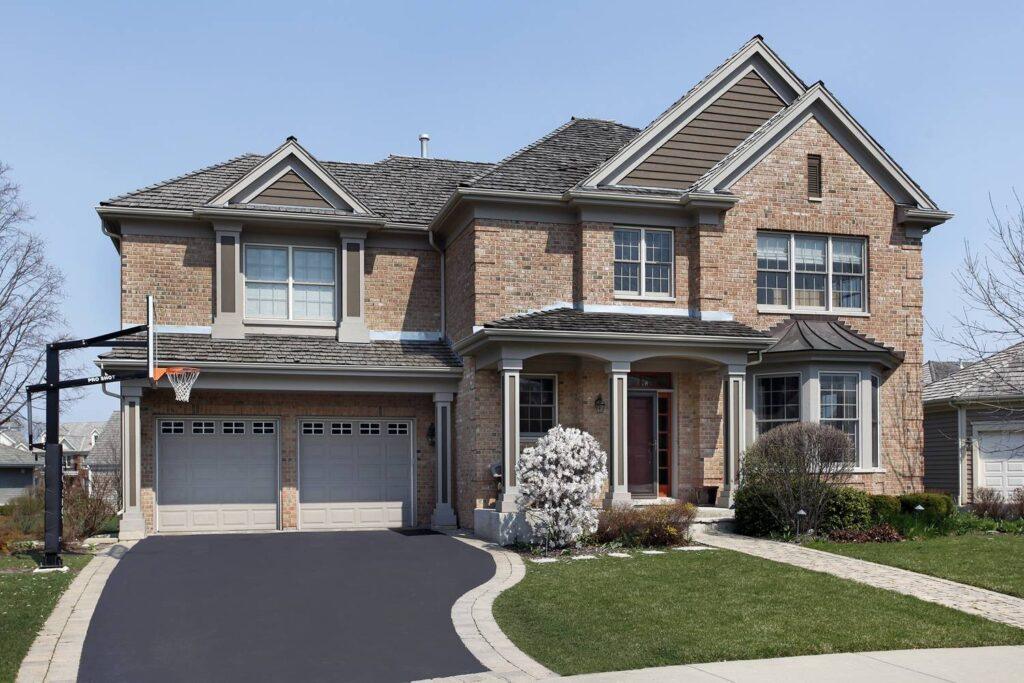
Driveway Paving

Driveway Paving for Custom Homes, Estates and Bay Area Residences

A driveway is the first surface people see on a property and the one that takes every delivery truck, moving van and daily trip. When it sits on a weak base, it cracks, settles and holds water within a few seasons, no matter how good it looks on day one.

Huff General Engineering provides driveway paving for homeowners and custom home builders across the Bay Area and the Sacramento corridor, from our base in Walnut Creek. Most of our residential work is on high-end custom homes, where the driveway has to match the quality of the house and hold up for years.

REQUEST A QUOTE

Submit the form below and one of our estimators will get back to you shortly.
*We respect your privacy and will not share your information.

Owner Michael Huffaker learned the trade running grinders and Vögele pavers, and he approaches every driveway from the ground up: grading, base and compaction first, surface last.

Get a Free Driveway Estimate

What Driveway Paving Involves and Why the Base Decides How Long It Lasts

The asphalt you drive on is only the top layer. Under it sits a compacted aggregate base, and under that, the native soil. The surface performs only as well as those two layers.

Much of the East Bay is built on clay-heavy soils that swell when winter rain soaks in and shrink as the ground dries out over summer. On a driveway, that movement turns into cracks, dips and broken edges whenever the base was too thin, poorly compacted or laid over soft ground.

Cutting corners below the surface saves a day on the job and costs the owner a replacement years early. Asphalt driveway paving done from the base up is the right call for:

  • New custom homes, where the driveway is one of the final pieces before move-in
  • Older driveways with widespread cracking or settling that repairs no longer fix
  • Gravel or worn concrete driveways being converted to asphalt
  • Properties adding parking, a turnaround or a wider entry

For shared private roads, HOA lanes and long access roads serving several homes, see our roadways and laneways paving page.

Driveway Paving Services We Offer

  • New driveway installation: For new construction and custom home builders. We grade and build the base from scratch and time the paving with the rest of the site work, so the driveway is finished clean for the final walkthrough.
  • Driveway replacement: Full removal of the failed driveway, correction of the soil underneath, a new compacted base and new asphalt. The right choice when the problem is below the surface.
  • Resurfacing with milling: If the existing base passes inspection, we mill off the worn top layer and place a new asphalt layer. Milling keeps finished heights right where the driveway meets the garage, walkways and street.
  • Extensions, turnarounds and parking pads: Added width and parking built to the same base standard as the main driveway, so the new section does not settle away from the old one.
  • Concrete borders and aprons: Edging, aprons and transitions handled by our own concrete crews.

How We Pave a Driveway

  1. Site evaluation: We walk the property, check the slope, see where water runs today, probe for soft spots and plan how trucks and equipment will get in. A long or steep driveway on a hillside lot is planned differently than a flat pad.
  2. Removal and haul-off: Old asphalt, concrete or gravel is removed and hauled away. If the base is sound and resurfacing makes sense, we mill the surface instead of tearing everything out.
  3. Soil correction: Soft or organic soil is dug out, and the ground is shaped and compacted. On clay soils, this is the step that keeps the driveway from moving with the seasons.
  4. Aggregate base: Crushed aggregate base is built up and compacted in stages until it is firm enough to carry a loaded truck without moving. The base carries the weight of vehicles; the asphalt protects it.
  5. Grading for drainage: The surface is set with enough fall to move water off the driveway and away from the garage, the house and the landscaping. Standing water breaks asphalt down faster than traffic does.
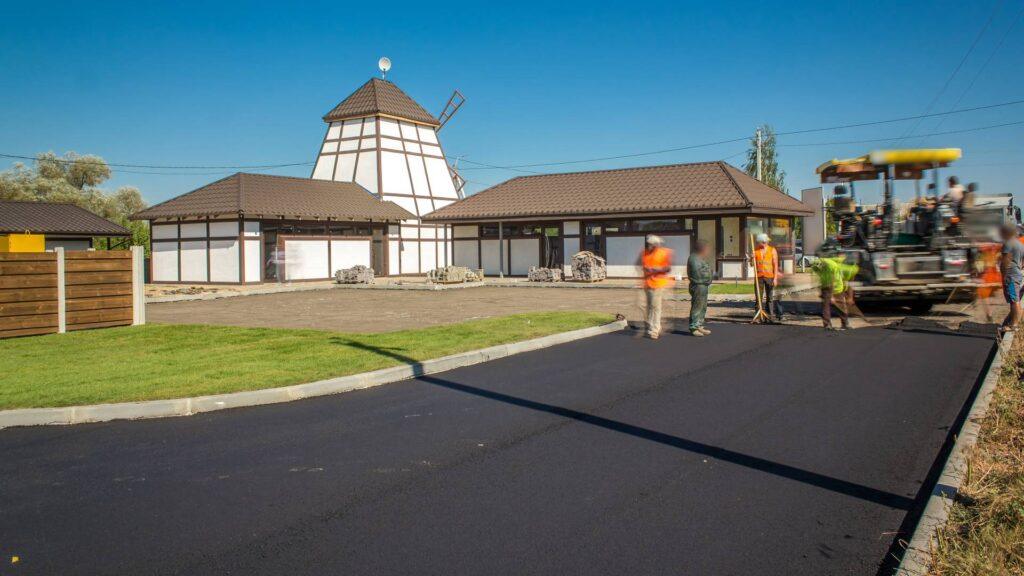
  6. Paving and compaction: Hot asphalt is placed with a paver wherever the site allows, which gives an even thickness and a smooth, consistent finish, then rolled while it is still hot. Edges and tie-ins at the garage, walkways and street are finished by hand.
  7. Cleanup and walkthrough: We clean the site, check hardscape and planting beds, and walk the finished driveway with you, including how to treat new asphalt in its first weeks.

Signs Your Driveway Needs Paving, Not Just Repairs

  • Cracks spreading in a web or alligator pattern across large areas
  • Dips, low spots or ruts where the tires travel
  • Puddles that stay after rain, or water running toward the garage
  • Edges crumbling into the landscaping
  • Potholes that return after patching
  • A gray, brittle surface shedding loose stone
  • Raised sections pushed up by tree roots

If the damage is limited to one area and the base is still stable, a repair may be enough. Our asphalt repair and patchwork page explains when patching holds. When the problems are spread across the driveway, repairs only buy time.

Best Time to Pave a Driveway in Northern California

The Bay Area’s mild climate lets us pave most of the year. Rain is the real limit: hot asphalt should not go down on a wet base, and saturated soil cannot be compacted properly. The dry season from late spring through fall is the most predictable, and winter projects are scheduled around dry stretches.

On new construction, the driveway should be paved after the heavy traffic is done. Concrete trucks, cranes and material deliveries running over finished asphalt are one of the most common causes of early damage on custom home sites, so we coordinate the timing with the builder.

Long, dry summers are hard on asphalt in another way: sun and heat oxidize the surface and dry it out. Once a new driveway has cured, sealcoating on a regular schedule protects it and slows that wear.

Why Homeowners and Builders Choose Huff General Engineering

  • The owner knows the work: Michael Huffaker runs the company and the jobs. His experience comes from operating heavy equipment and production paving, not from a sales desk.
  • Built for high-end properties: We protect the site, keep the work area clean and finish every edge and transition so the driveway fits the house.
  • Commercial-level capacity: The same crews and equipment handle parking lots and commercial paving, so a long estate driveway or a large motor court is a normal job for us, not a stretch.
  • Licensed and local: A licensed California contractor based in Walnut Creek, offering free estimates.

Where We Offer Driveway Paving

We pave driveways across Contra Costa and Alameda counties and along the corridor toward Sacramento, including:

  • Walnut Creek
  • Concord
  • Pleasant Hill
  • Lafayette
  • Orinda
  • Moraga
  • Danville
  • San Ramon
  • Dublin
  • Martinez

Frequently Asked Questions About Driveway Paving

How long does an asphalt driveway last in the Bay Area?

It depends mostly on what is under it. A driveway built on corrected soil, a well-compacted base and proper drainage, and sealcoated on schedule, lasts far longer than one paved over a weak base. We give you a realistic expectation for your property at the site visit.

Should I choose asphalt or concrete for my driveway?

Asphalt flexes slightly with ground movement, is easier to repair and resurface, and gives a smooth, dark finish. Concrete is rigid, has a different look and offers decorative options. We install both, so we recommend based on your property, not on what we sell.

Can you pave a long or steep driveway?

Yes. Steep driveways need careful compaction and water control so runoff does not wash out the edges or the base. Long driveways need planning for truck access and for drainage along the whole length. Both are worked out during the site evaluation.

Do I need a permit to pave my driveway?

Replacing a driveway within the same footprint often does not, but work on the street approach or sidewalk is in the public right-of-way and typically needs a city encroachment permit. Some HOAs also require approval. We check the requirements before the project is scheduled.

What affects the cost of driveway paving?

Size, the condition of the existing driveway and what has to be removed, the soil and base work required, slope and drainage, equipment access and extras like concrete aprons or borders. You get a written estimate after we see the property.
Get a Free Driveway Paving Estimate

Tell us about your driveway and one of our estimators will get back to you shortly. Or call 925-360-0984, Monday through Sunday, 7:00 AM to 8:00 PM.

Request My Free Estimate

Huff General Engineering, Walnut Creek, CA. Serving the Bay Area and the Sacramento corridor. 925-360-0984