
Home » Asphalt Crack Repair
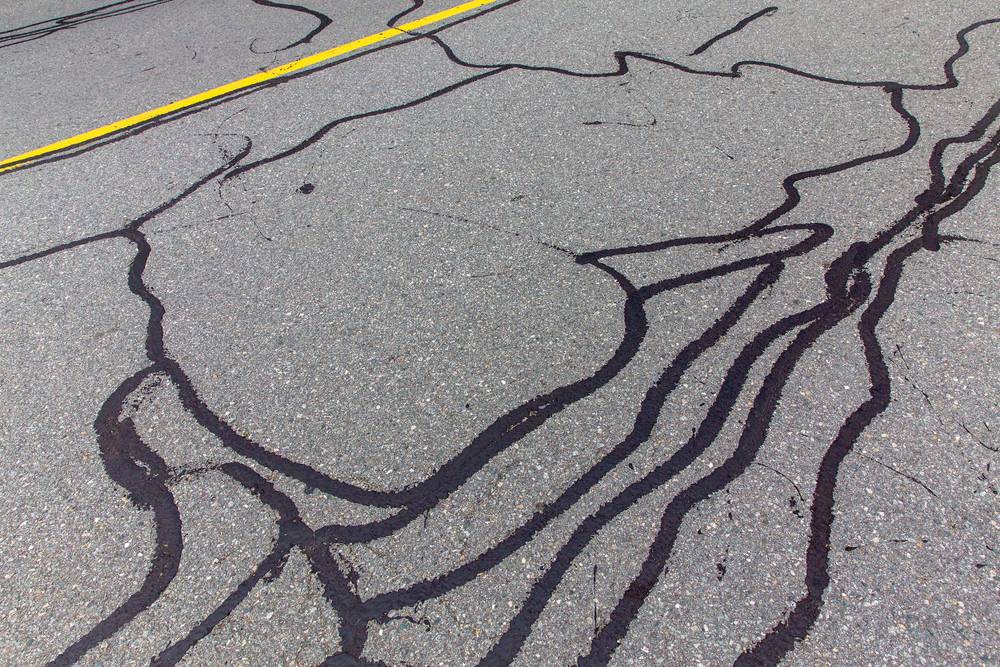
Cracks in asphalt allow water to enter the surface and weaken the base below, and over time that leads to larger failures like potholes and broken pavement. A crack that looks harmless in August can be the starting point of a pothole by the end of the rainy season.
Huff General Engineering provides asphalt crack repair for driveways, parking lots, private roads and HOA streets from the Bay Area to the Sacramento corridor. Sealing cracks early maintains the structure of the pavement and keeps damage from spreading across the surface. It costs a fraction of the repairs it prevents.
Asphalt is flexible, but not endlessly. As it ages, sun oxidizes the binder and the surface becomes stiffer and more brittle, so instead of bending with daily temperature swings and ground movement, it splits. In the East Bay, the clay soils under many properties add to that movement as they dry and shrink through the summer, which is when many existing cracks widen.
On its own, a crack is a small problem. The real damage starts when water gets in. Rain runs down the opening into the base, softens it and washes out fine material. Traffic pressing on that weakened spot then pushes the crack wider and starts new ones beside it. What began as a single line turns into a network of cracks, then a pothole.
Not every crack is the same, and reading them tells you what is happening:
When the damage has moved beyond cracks into potholes, sinking or alligator cracking, the right fix is asphalt repair and patchwork rather than filler.
Catching these early keeps a low-cost maintenance job from becoming a patching or replacement project.
Crack sealing works best in dry weather, when the cracks are clean and free of moisture. Mild spring and fall days are a good fit, because cracks sit near the middle of their range of movement, so the sealant is not installed fully stretched or fully squeezed.
The most important deadline is the start of the rainy season. Sealing cracks in late summer or early fall closes the openings before winter rain has a chance to reach the base, which is when most crack damage turns into potholes. On parking lots and HOA roads, crack sealing is usually done just ahead of sealcoating so both protect the surface together.
Our crews seal and fill cracks on residential and commercial properties in San Ramon, Concord, Dublin, Walnut Creek, Martinez, Pleasant Hill, Danville, Lafayette, Moraga and Orinda, and throughout our wider service area.
Crack sealing uses a flexible material for cracks that move with temperature changes, so it stretches and compresses without breaking its bond. Crack filling is for wider, more stable cracks that move less and mainly need to be closed against water and debris. Many surfaces have both types, and we treat each one accordingly.
No. Single cracks and moderate networks can be sealed, but alligator cracking, potholes and sunken areas mean the base has failed. Those need to be cut out and patched, and filler applied over them will break apart quickly.
It depends on the material, how well the crack was prepared, traffic and weather. Proper cleaning and drying make the biggest difference, and checking the surface regularly lets new or reopened cracks be resealed before they let water in.
Yes. Sealcoat does not fill cracks, so they are sealed first and the sealcoat is applied over the whole surface afterward. Doing both in sequence gives the best protection.
Crack repair pricing comes down to:
Every estimate is put in writing after an on-site look at the pavement.
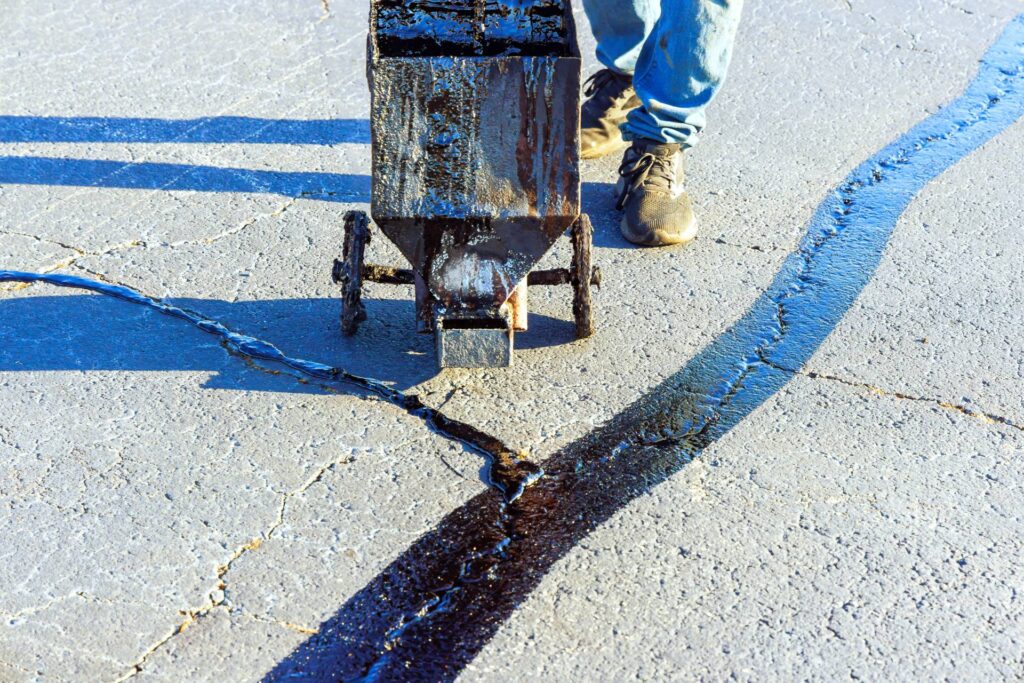
Let us know about your pavement and one of our estimators will get back to you shortly. If the rainy season is close, call 925-360-0984, Monday through Sunday, 7:00 AM to 8:00 PM, and we will get you on the schedule.
Huff General Engineering, Walnut Creek, CA. Serving the Bay Area and the Sacramento corridor. 925-360-0984
Submit the form below and one of our estimators will get back to you shortly.
*We respect your privacy and will not share your information.