Home » Asphalt Sealcoating
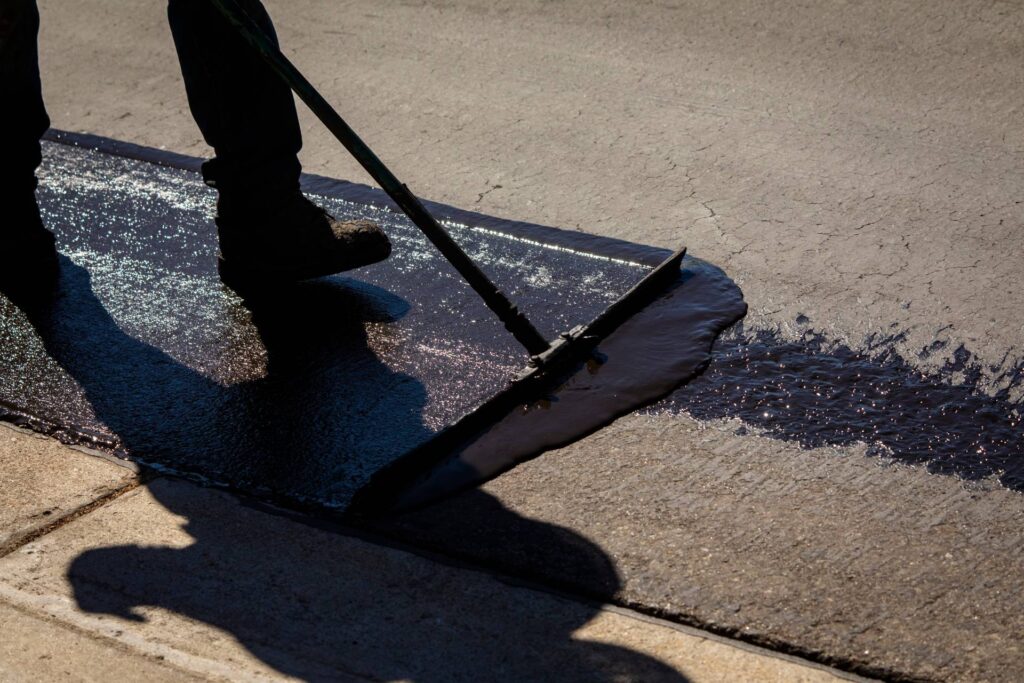
Asphalt starts aging the day it is installed. Sunlight oxidizes the binder that holds the stone together, water works into the surface, and traffic wears it down. The pavement turns gray, dries out and begins to crack long before the base underneath has any problem.
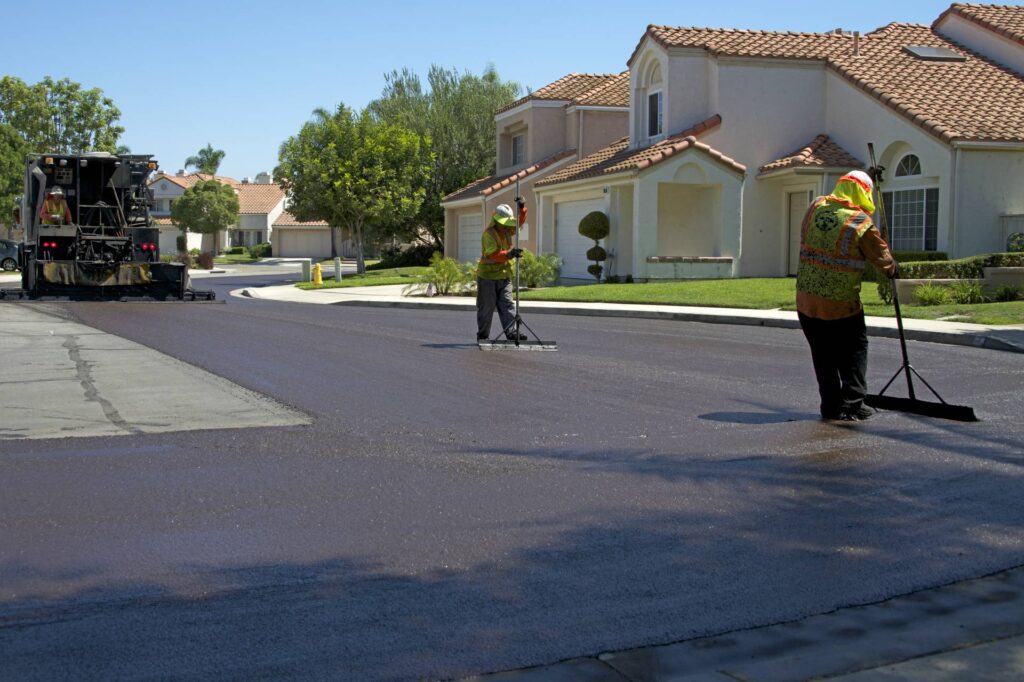
Huff General Engineering provides asphalt sealcoating for homeowners, HOAs, property managers and commercial owners across the Bay Area and the Sacramento corridor. Sealcoating creates a protective layer that reduces moisture penetration and shields the surface from UV damage. It works best on asphalt that is still structurally sound.
Owner Michael Huffaker has built and repaved enough asphalt to know what separates a surface that lasts from one that wears out early. Regular maintenance is a big part of that difference, and sealcoating is the first line of it.
Request a Sealcoating Estimate
In Northern California, the biggest threat to an aging surface is often the sun. Long, dry summers bake the pavement and oxidize the top layer, which is why so many Bay Area driveways and lots look faded and brittle well before they fail. Winter rain then finds the small openings that the dry season created.
A sealcoat puts a fresh, flexible layer over the asphalt that:
What sealcoating will not do is fix structural damage. It does not fill potholes, level sunken areas or repair a failed base. Coating over that kind of damage hides it for a few months, then peels away with it. When the pavement has those problems, repairs come first.
If the asphalt already has potholes, alligator cracking or soft spots, those need asphalt repair and patchwork before sealing makes sense.
New asphalt should not be sealed right away, since it needs time to cure first, and we will let you know when your new driveway or lot is ready for its first coat. From there, sealcoating works best on a regular cycle, with the interval set by how much sun the surface gets, how much traffic it carries and how it has held up since the last application, which is why a busy commercial lot in full sun needs attention sooner than a shaded residential driveway.
More is not always better, because sealing too often builds up layers that can crack and flake on their own, so we base the schedule on the condition of your pavement rather than a fixed calendar. Weather also plays a role, since sealcoat needs dry pavement, mild to warm temperatures and no rain in the forecast while it cures, and that is why most sealcoating in Northern California happens between late spring and early fall.
We sealcoat driveways, private roads and parking lots in Walnut Creek, Lafayette, Orinda, Moraga, Danville, Pleasant Hill, Concord, San Ramon, Dublin and Martinez, and throughout the Bay Area and the Sacramento corridor.
It depends on sun exposure, traffic and how the surface has held up. Driveways in full sun usually need it sooner than shaded ones. We look at the current condition and recommend a schedule that protects the asphalt without building up excess layers.
No. Sealcoat protects the surface but cannot fill or bridge cracks. Cracks are filled first, and then the sealcoat goes over the whole surface to slow new damage.
You can usually walk on it before you can drive on it. Cure time depends on temperature, sun and humidity on the day of application, so we give you specific timing before we leave the site.
On sound asphalt, yes. It slows oxidation and water damage, keeps the surface looking uniform, and helps push back the point where larger repairs or replacement are needed. On asphalt that is already failing, repairs are the better use of the budget.
The main factors are:
You get a written estimate after we inspect the pavement.
Tell us about your driveway, road or lot and one of our estimators will get back to you shortly. You can also call 925-360-0984, Monday through Sunday, 7:00 AM to 8:00 PM.
Huff General Engineering, Walnut Creek, CA. Serving the Bay Area and the Sacramento corridor. 925-360-0984
Submit the form below and one of our estimators will get back to you shortly.
*We respect your privacy and will not share your information.