Concrete Work

Concrete Work From Foundations to Decorative Finishes, Built by an Experienced Concrete Contractor

Concrete is unforgiving. Once it is poured, mistakes in the subgrade, the forms or the reinforcement are locked in, and they show up later as cracks, settling slabs, sidewalks that lift and walls that lean. Getting it right depends on planning, preparation and correct installation before the first truck arrives.

Huff General Engineering is a concrete contractor serving homeowners, custom home builders, developers and commercial property owners throughout the Bay Area and up the corridor to Sacramento. We handle both new installations and replacements, from structural work like foundations and retaining walls to the sidewalks, curbs, slabs and stamped surfaces that finish a property.

REQUEST A QUOTE

Submit the form below and one of our estimators will get back to you shortly.
*We respect your privacy and will not share your information.

Each project is built for its intended use, whether it supports foot traffic, vehicle loads or a structure. The focus stays on concrete that performs under real conditions, not concrete that only looks good for the first season.

Request a Concrete Estimate

What Good Concrete Work Depends On

Concrete surfaces are under constant stress from weight, weather and ground movement. In much of the East Bay, that movement comes from clay soils that swell in the wet months and shrink as they dry. Concrete is strong under compression but rigid, so when the ground underneath moves and the slab was not prepared for it, it cracks rather than flexing.

That is why the work below the surface matters as much as the finish. Four things separate concrete that stays flat and tight from concrete that starts breaking up in a few years:

  • A stable, compacted base
  • The right reinforcement for the load
  • Control joints placed so cracking happens where it is planned
  • Proper curing

Concrete Services We Provide

  • Foundations and structural concrete: Home foundations, footings, warehouse slabs and structural elements built to the project’s engineered plans, with forming and reinforcement inspected before the pour.
  • Retaining walls: Concrete walls that hold back soil on sloped lots and around driveways, built with footings and drainage behind the wall so water pressure does not push it out of line. Taller walls or walls supporting a load typically require engineering and a permit, and we build to those plans.
  • Slabs and pads: Patios, garage and shop slabs, equipment pads, trash enclosure pads and other flatwork, sized and reinforced for what will sit on them.
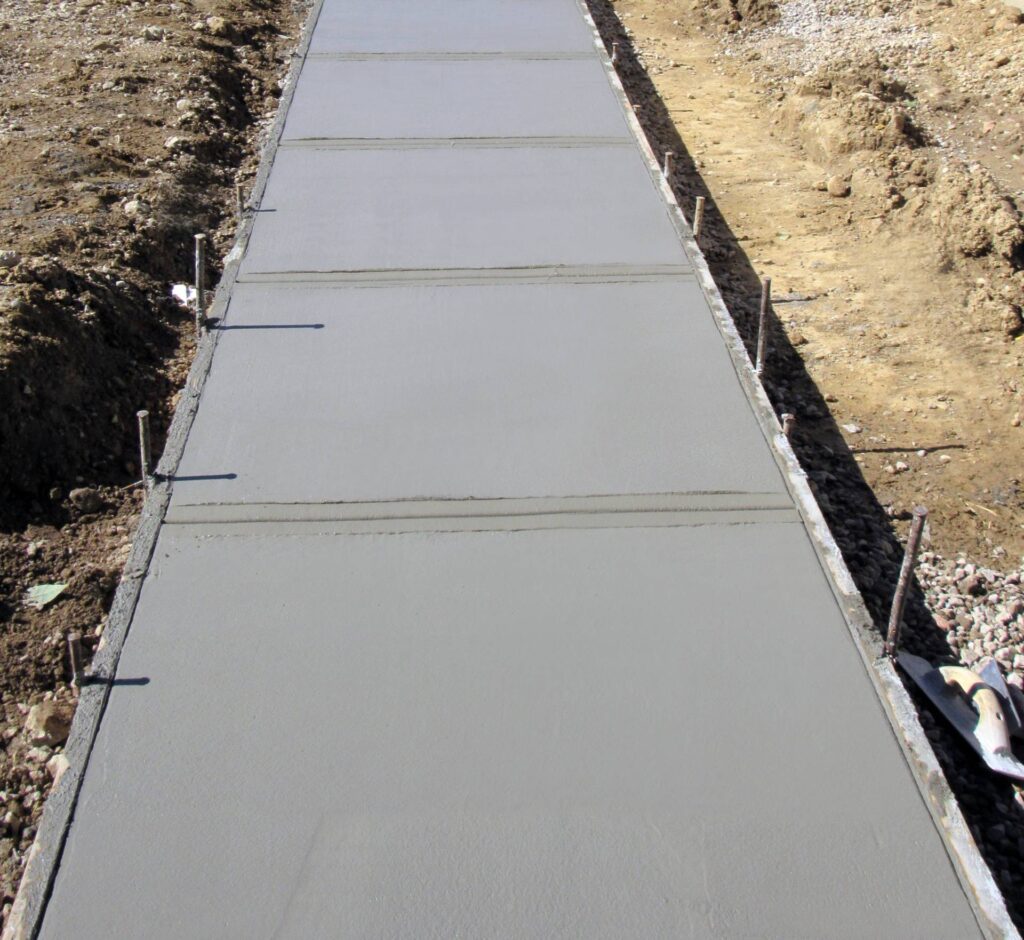
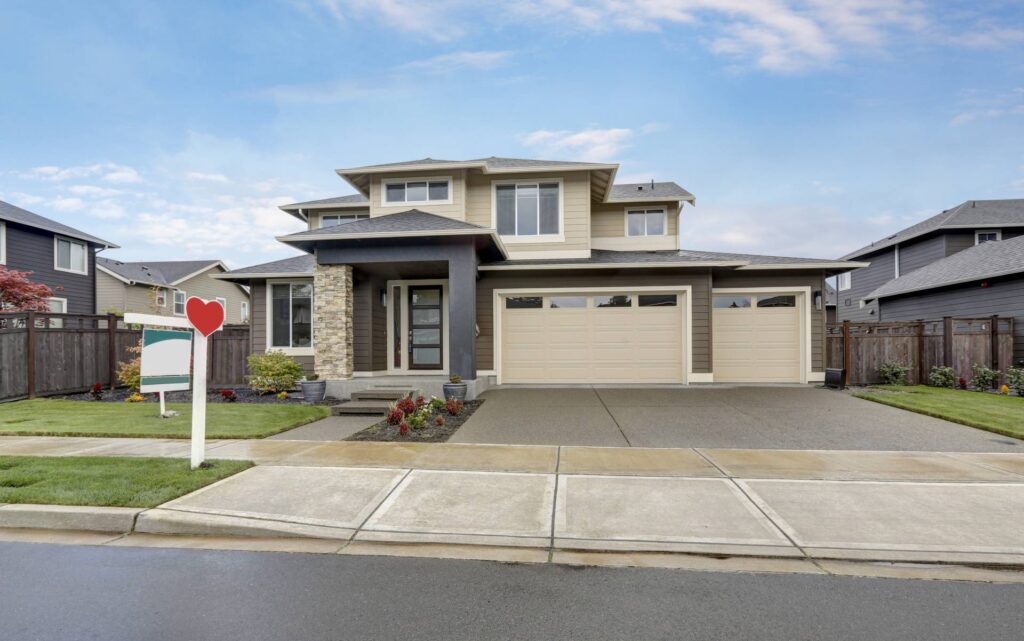
  • Sidewalks, curbs and gutters: Walkways, curb and gutter runs and approaches for homes, commercial sites and new developments, formed to line and grade so water flows where it should.
  • Stamped and decorative concrete: Patterned and colored finishes for patios, walkways, pool decks and entries, combining appearance with durability and sealed to protect the color.
  • Concrete borders and aprons for asphalt: Driveway aprons, ribbons and edging that frame an asphalt surface. These pair with our driveway paving work.

How We Build Concrete Projects

  1. Plan the scope: We review the site, the intended use and any plans or permit requirements, then set the dimensions, thickness, reinforcement and finish before anything is formed.
  2. Excavate and prepare the subgrade: Soil is excavated to the required depth, soft material is removed and the subgrade is compacted so the concrete has uniform support across its whole footprint.
  3. Place the base: A compacted aggregate base goes in under slabs and flatwork to give a stable, well-draining layer between the soil and the concrete.
  4. Form and reinforce: Forms are set to line and grade. Rebar or wire reinforcement is placed and supported so it sits inside the concrete, where it can do its job, not on the bottom of the pour.
  5. Pour and finish: Concrete is placed, consolidated and finished to the specified surface, whether that is a broom finish for traction, a smooth trowel finish or a stamped pattern. Control joints are cut or tooled in so cracks follow planned lines.
  6. Cure properly: Fresh concrete is protected from drying too fast, which is a real risk on hot, dry Bay Area days, and from rain on the fresh finish. Correct curing is a large part of how strong and crack-resistant the finished surface becomes.
  7. Strip and clean up: Forms are removed, edges are backfilled and the site is left clean, with clear guidance on when the surface can take foot traffic and vehicles.

Signs Your Concrete Needs Replacement

  • Cracks that keep widening or have one side higher than the other
  • Sidewalk panels lifted by roots or settling, creating trip hazards
  • Slabs that have sunk, tilted or pulled away from the house
  • Retaining walls that lean, bulge or show cracks near the footing
  • Flaking, scaling or crumbling surfaces with exposed stone
  • Curbs and gutters that hold water instead of draining it

Hairline cracks on their own are common and often cosmetic. Cracks that move, widen or come with settling usually point to a problem in the base or the soil that patching will not solve.

Timing a Concrete Project in Northern California

Concrete can be poured most of the year here, but each season needs its own planning. Summer heat dries the surface quickly, so pours are often scheduled for the cooler morning hours and the slab is kept moist while it cures. Winter work is planned around the rain so fresh finishes are not damaged before they set.

On new construction, foundations and structural concrete come early and follow the building schedule. Flatwork, sidewalks and decorative surfaces usually go in near the end, after heavy equipment has finished moving across the site. We coordinate that sequence with the builder or general contractor.

Why Clients Choose Huff General Engineering for Concrete

  • Asphalt and concrete under one roof: Concrete curbs, pads and borders are built by the same company that paves the driveway or parking lot, so the two tie together cleanly and there is one schedule to manage.
  • Structural and decorative capability: From foundations and retaining walls to stamped patios, one crew handles the full range of residential and commercial concrete.
  • Experience behind the work: Owner Michael Huffaker’s background runs from heavy equipment and production paving to foundations and structural concrete, and that field experience shapes how every pour is planned.
  • Clean execution: Forms are straight, edges are sharp and sites are left clean, a standard we hold on luxury residences and public-facing commercial sites alike.

Where We Provide Concrete Work

We build concrete projects throughout Walnut Creek, Lafayette, Danville, Orinda, Moraga, Pleasant Hill, Concord, Martinez, San Ramon and Dublin, and across the Bay Area and the Sacramento corridor.

Concrete Work FAQ

Why does new concrete crack, and can it be prevented?

Concrete shrinks slightly as it cures, and the ground underneath moves over time, so some cracking is normal. Good installation controls it: a compacted base, the right reinforcement, control joints in the right places and proper curing keep cracks small and along planned lines instead of random and wide.

Do I need a permit for concrete work?

It depends on the project. Foundations, structural concrete and taller retaining walls usually require permits and engineered plans. Sidewalks, curbs or driveway approaches that touch a city street typically need an encroachment permit from the city. Many patios and private flatwork do not need a permit, and we confirm the requirements for your project before scheduling.

Is stamped concrete durable?

Yes, when it is installed on a proper base and sealed. The pattern and color are part of the concrete itself, and resealing over the years keeps the color rich and protects the surface from wear and staining.

Should I choose concrete or asphalt?

Concrete suits patios, walkways, foundations, pads and decorative areas where a rigid, long-lasting surface is the goal. Asphalt is often the better choice for driveways, roads and parking areas because it flexes with ground movement and is easier to resurface. Many properties use both, which is why we do both.

What affects the cost of concrete work?

Price depends on:

  • The size and thickness of the pour
  • Excavation and base work
  • Reinforcement
  • Forming complexity
  • Finish type (broom, smooth or stamped)
  • Site access
  • Any engineering or permit requirements

We provide a written estimate once we understand the full scope.
Start Your Concrete Project

Share the details of your project and one of our estimators will get back to you shortly. For foundations, structural work or larger commercial pours, call 925-360-0984, Monday through Sunday, 7:00 AM to 8:00 PM.

Request My Free Estimate

Huff General Engineering, Walnut Creek, CA. Serving the Bay Area and the Sacramento corridor. 925-360-0984