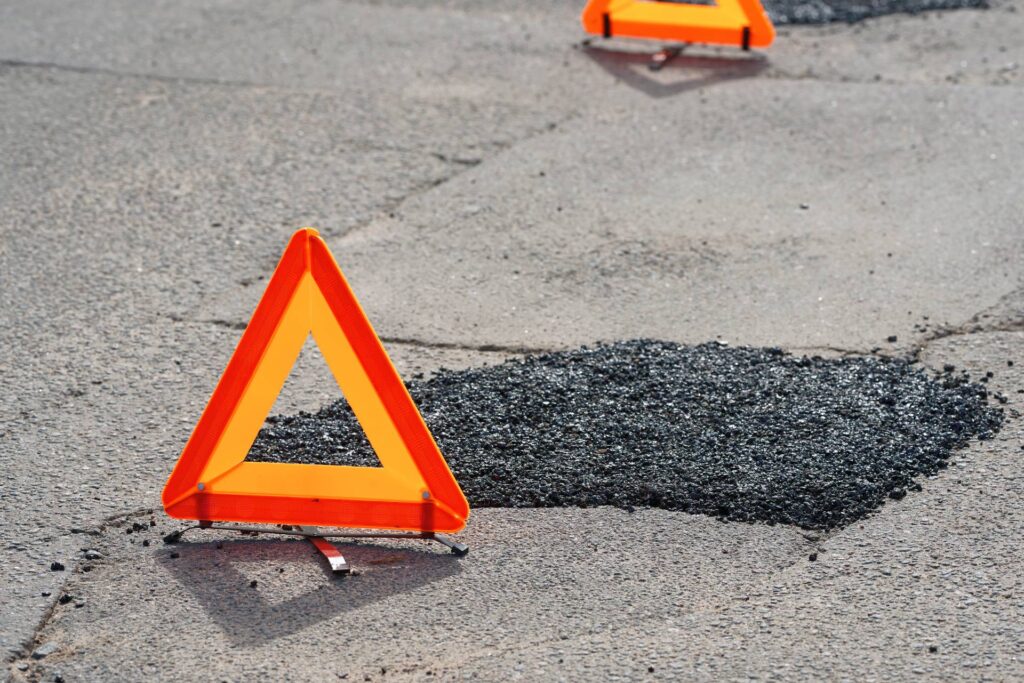
Asphalt Repair & Patchwork

Asphalt Repair and Patchwork That Fixes the Cause, Not Just the Surface

Asphalt damage does not fix itself. A pothole, a sunken utility patch or a broken edge keeps spreading every time water gets in and traffic rolls over it. A surface patch thrown on top only hides the problem until the next rain.

Huff General Engineering handles asphalt repair for homeowners, property managers, developers and general contractors across the Bay Area and the Sacramento corridor. Every repair starts with finding out why the pavement failed, because that decides whether a patch will hold or come back.

REQUEST A QUOTE

Submit the form below and one of our estimators will get back to you shortly.
*We respect your privacy and will not share your information.

Owner Michael Huffaker has spent his working life on paving and milling crews. He reads failed asphalt the way a mechanic reads a worn tire: the pattern of the damage tells you what is happening underneath.

Request a Repair Estimate

Why Asphalt Fails in Spots and What a Real Repair Has to Address

Most localized damage starts below the surface. Water gets through a crack or an open joint, softens the base, and the asphalt above loses its support. Traffic does the rest: the area flexes, breaks into pieces and eventually opens into a pothole.

Common causes we find when we open up a failed area:

  • Water trapped in the base from poor drainage or a low spot
  • A base that was too thin or never compacted properly
  • Utility trenches backfilled loosely and patched without proper compaction
  • Heavy trucks crossing pavement that was built for cars
  • Settlement around catch basins, manholes and valve covers

A repair that removes the broken asphalt but leaves a wet or soft base in place will fail again in the same spot. Lasting asphalt patching means correcting what caused the failure, then rebuilding the section so it carries traffic like the pavement around it.

Asphalt Repairs We Handle

  • Pothole repair: The broken area is cut out to sound pavement, the base is corrected and the hole is rebuilt with hot asphalt, compacted in place. No loose fill and no bagged cold patch left as the permanent fix.
  • Failed sections and base repair: Where the damage covers a larger area or the base has gone soft, we remove the asphalt and the failed base material, rebuild and compact the base, and repave the section.
  • Utility cut and trench patch paving: Restoration paving over water, sewer, gas and electrical trenches for general contractors, utility crews and developers. Compacted and finished to sit flush with the existing road or lot.
  • Catch basin repairs: Settled or broken asphalt around storm drains is removed and rebuilt so water flows into the grate instead of pooling around it and undermining the pavement.
  • Utility adjustments: Manhole covers, valve boxes and other castings raised or lowered to match finished grade, so they do not become trip hazards or bumps after a repair or an overlay.

For cracks that have not yet broken apart, crack filling is the better first step. See our asphalt crack repair page for that work.

Our Asphalt Repair Process

  1. Assess the damage. We look at the pattern of the failure, check drainage and probe the base to decide between a patch and a deeper repair. Not every bad spot needs the same fix.
  2. Cut clean edges. The damaged area is saw-cut or milled into a square or rectangular shape that extends into solid pavement. Straight, vertical edges give the new asphalt something firm to bond against.
  3. Remove to sound material. Broken asphalt comes out, and so does any wet or soft base below it. We dig until we reach material that will support the repair.
  4. Rebuild the base. New aggregate base is placed and compacted. If water caused the failure, we correct the grade or drainage so the same water does not come back.
  5. Prepare the joints. A tack coat is applied to the cut edges and the bottom of the patch so the new asphalt bonds to the old instead of sitting loose in the hole.
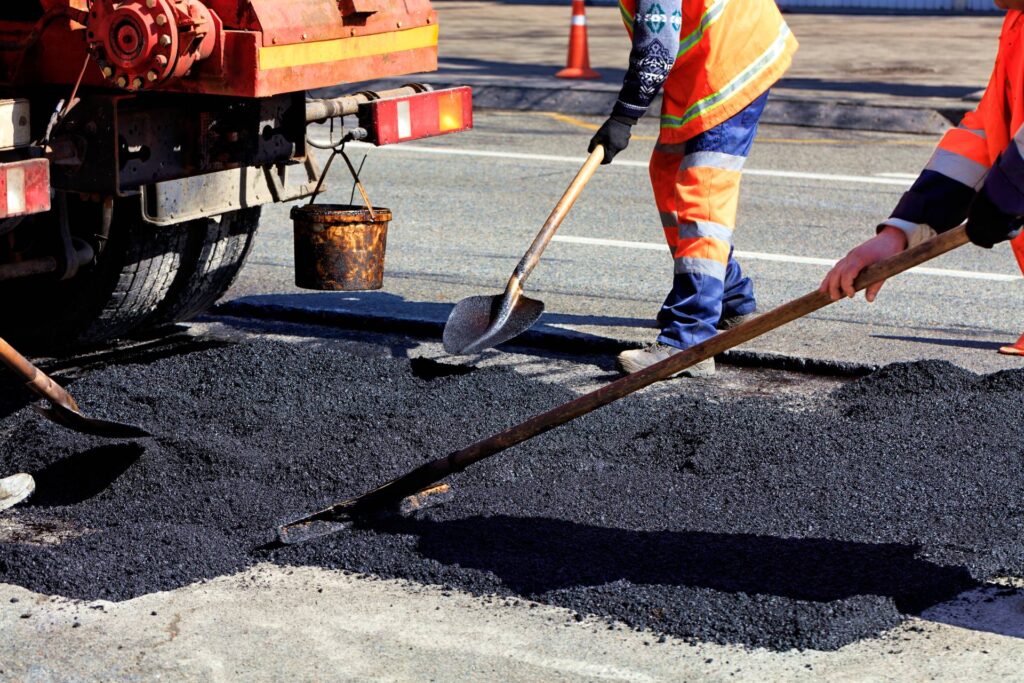
  6. Place and compact hot asphalt. On deeper repairs, asphalt is placed in layers, and each layer is compacted with rollers or plate compactors before the next goes down. That keeps the patch from settling below the surrounding surface.
  7. Seal and match. The finished patch is brought level with the existing pavement and the seams are sealed, so there is no lip for tires to catch and no open joint for water to enter.

Signs Your Pavement Needs Repair

  • Potholes, or patches that keep breaking open
  • Spider-web cracking in one area that is starting to lift or crumble
  • Soft spots that move or flex under a vehicle
  • Sunken trench lines from past utility work
  • Water pooling around a storm drain or a low spot after rain
  • Raised or sunken utility covers
  • Edges breaking away along curbs, gutters or the shoulder of a private road

When damage like this covers most of the surface, repairs stop being cost-effective. At that point, a full replacement such as new driveway paving usually serves the owner better, and we will tell you so.

When to Schedule Asphalt Repairs

Repairs are easiest and cheapest while the damage is still small. In Northern California, winter rain is when damage grows fastest: water fills open cracks and holes, softens the base, and turns one pothole into several.

The best window for permanent repairs is dry weather, when the base can be dug out, corrected and compacted properly. For a hazard that cannot wait, a temporary fix can make the area safe until conditions allow the permanent repair.

On commercial lots and private roads, repairs can be phased section by section to keep access open. They can also be timed ahead of sealcoating or striping so the whole surface is finished in one sequence.

Why Property Owners and Contractors Choose Huff General Engineering

  • Diagnosis first: We find out why the pavement failed before we price the fix, so you are not paying for a patch that comes back next season.
  • Repairs that match the surface: Patches are compacted to the same strength as the surrounding pavement and finished flush, with no humps, dips or open seams.
  • Built for contractor schedules: General contractors, utility crews and developers get trench restoration and patch paving coordinated with their project timelines.
  • Full paving capability: Our crews also build driveways, parking lots and roads from the base up, so we can tell you honestly when a repair is the right call and when it is not.

Where We Provide Asphalt Repair

We repair asphalt on homes, commercial lots and private roads throughout Walnut Creek, Concord, Pleasant Hill, Lafayette, Orinda, Moraga, Danville, San Ramon, Dublin and Martinez, and across the wider Bay Area toward Sacramento.

Asphalt Repair Questions

Why does my pothole keep coming back after it is patched?

Usually because the patch only filled the hole. If the base underneath stays wet or soft, or the patch was never compacted, traffic pushes it out again. A lasting repair removes the failed base, rebuilds it and compacts hot asphalt in place.

Should I patch my pavement or replace it?

Patching makes sense when the damage is limited to specific areas and the rest of the pavement is in good shape. When failures are spread across the surface or the base has broken down widely, replacement costs less over time than repeated patching.

Can you repair utility trench cuts in a city street or private road?

Yes. We handle trench patch paving for contractors and utility work. Patches in public streets are built to the restoration standards set by the city or agency that issued the permit.

How soon can I drive on a new asphalt patch?

In most cases, once the asphalt has cooled and been fully compacted. We will tell you when the area can open to traffic, and for heavier vehicles we may recommend waiting longer.

What affects the cost of asphalt repair?

The main factors are:

  • The size and depth of the damaged area
  • How much base needs to be removed and rebuilt
  • Drainage corrections
  • Access for equipment
  • Traffic control on commercial sites
  • Whether castings or catch basins need adjusting

You get a written estimate after we inspect the pavement.
Schedule Your Asphalt Repair

Send us the details and one of our estimators will get back to you shortly. To talk through the damage, call 925-360-0984, Monday through Sunday, 7:00 AM to 8:00 PM.

Request My Free Estimate

Huff General Engineering, Walnut Creek, CA. Serving the Bay Area and the Sacramento corridor. 925-360-0984